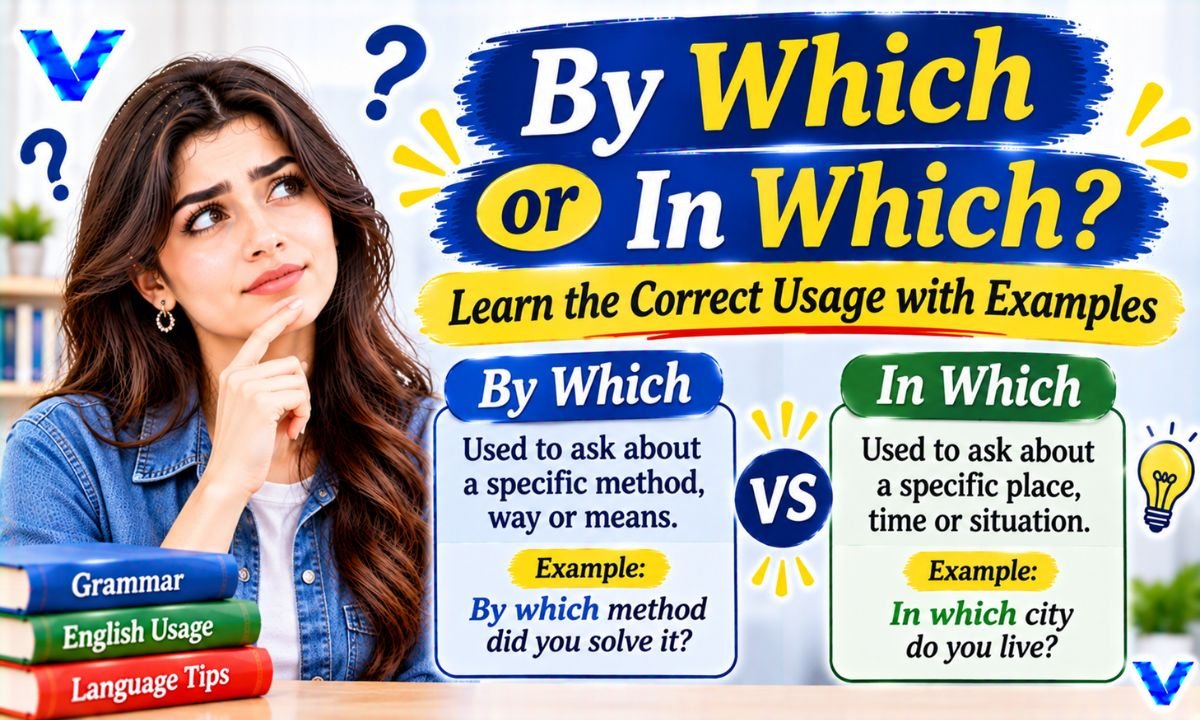
If you’ve ever paused mid-sentence wondering whether to write “the method by which” or “the method in which,” you’re not alone. These two phrases look similar, sound formal, and are often used interchangeably — but they aren’t always correct in the same context. Understanding the subtle grammatical difference between them can instantly improve the clarity and professionalism of your writing.
This guide breaks down exactly when to use by which versus in which, with simple tests, comparison tables, and real examples you can apply immediately.
What “By Which” Actually Means
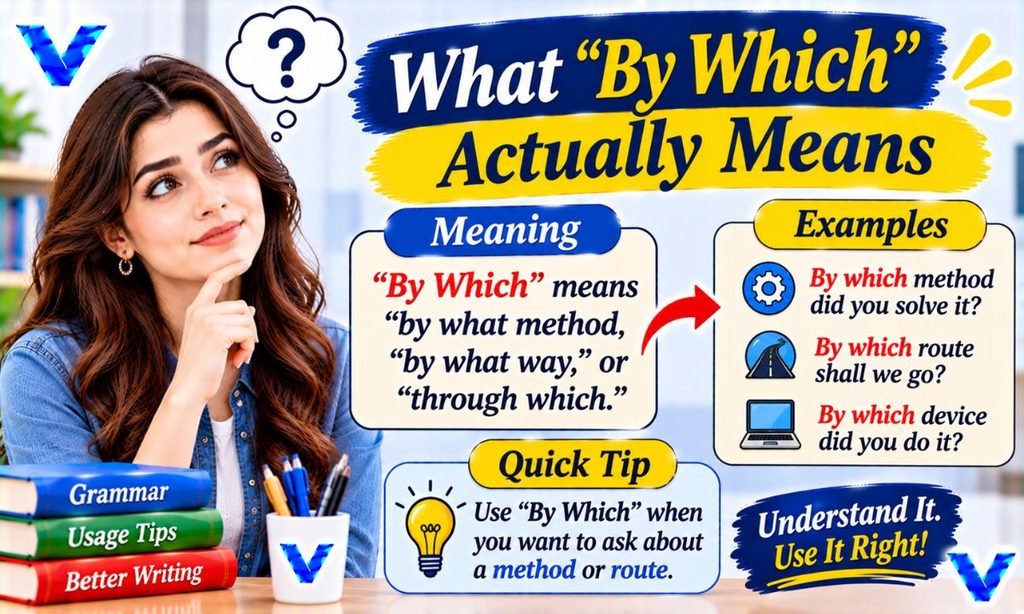
“By which” combines the preposition by with the relative pronoun which. It’s used to describe the method, means, or process through which something happens. Think of it as answering the question “how?”
- The strategy by which the team increased sales was simple: better follow-up calls.
- She found a way by which she could finish both projects on time.
Quick Meaning Table
| Phrase | Core Function | Answers the Question |
| By which | Method, means, or process | How? |
| In which | Location, situation, or time | Where? / In what context? |
A Fast Test
Ask yourself: Can I replace the phrase with “how” or “through what means”? If yes, “by which” is correct.
The process by which water becomes ice is called freezing. (Test: “The process through which water becomes ice…” ✅ works)
Read More: Emasculate vs Demasculate: What’s the Difference?
What “In Which” Actually Means
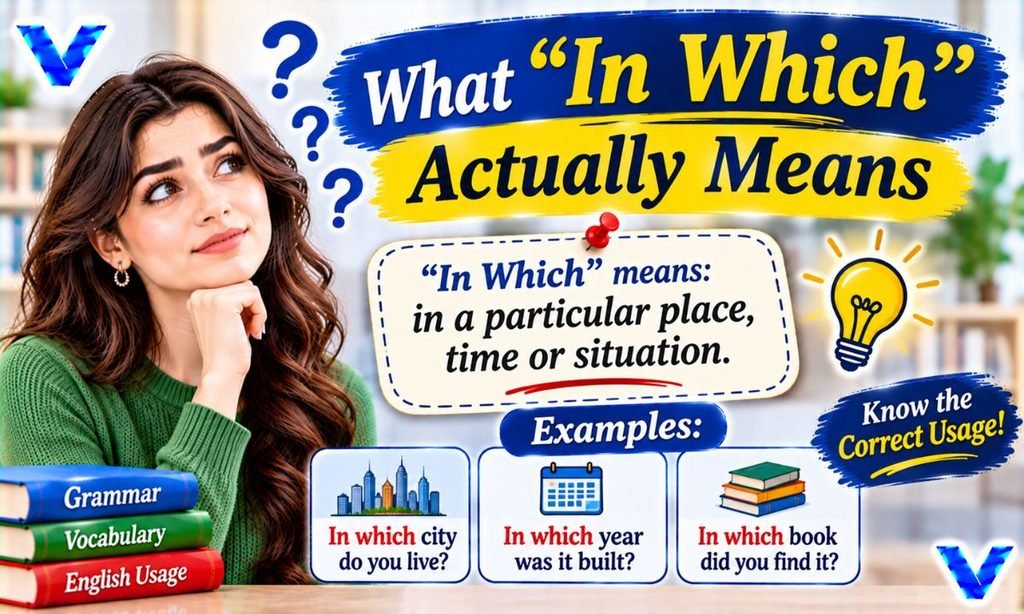
“In which” pairs the preposition in with “which” to refer to a place, situation, time, or condition. It adds precision to a noun mentioned earlier in the sentence, and it’s especially useful when you want to avoid ending a sentence with a dangling preposition.
- This is the house in which I grew up.
- The year in which the company was founded was 1998.
- The meeting in which the decision was made lasted three hours.
Structure
“In which” typically follows this pattern:
[Noun] + in which + [subject] + [verb]
Example: The classroom in which the students study is on the second floor.
Meaning Table
| Use Case | Example |
| Place | The town in which she lives is quiet. |
| Situation | The scenario in which this applies is rare. |
| Time | The decade in which the technology emerged was the 1990s. |
By Which or In Which Examples
| Sentence | Correct Phrase | Why |
| The system ___ we communicate has changed. | by which | Refers to a method |
| The office ___ she works is downtown. | in which | Refers to a location |
| The manner ___ he responded was rude. | by which | Refers to method/manner |
| The situation ___ we found ourselves was tricky. | in which | Refers to a condition |
When “Where” Works Better Than Either Phrase
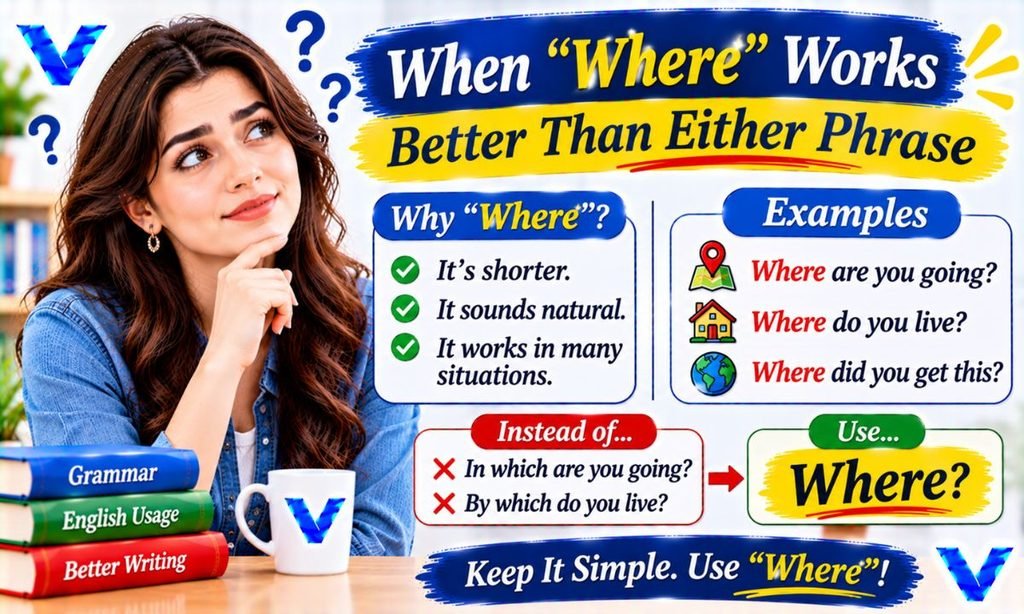
Sometimes writers overcomplicate a sentence by reaching for “in which” when a simple “where” would do the job just as well — and sound far more natural in casual writing.
- Formal: The city in which I was born is small.
- Natural: The city where I was born is small.
Rule of thumb: Use “where” for everyday, conversational writing. Reserve “in which” for formal, academic, or professional contexts where added precision matters.
Read More: I Will Like To vs. I Would Like To: Meaning, Difference & Correct Usage
Clarifying “Wherein” and Why It Sounds Old-Fashioned
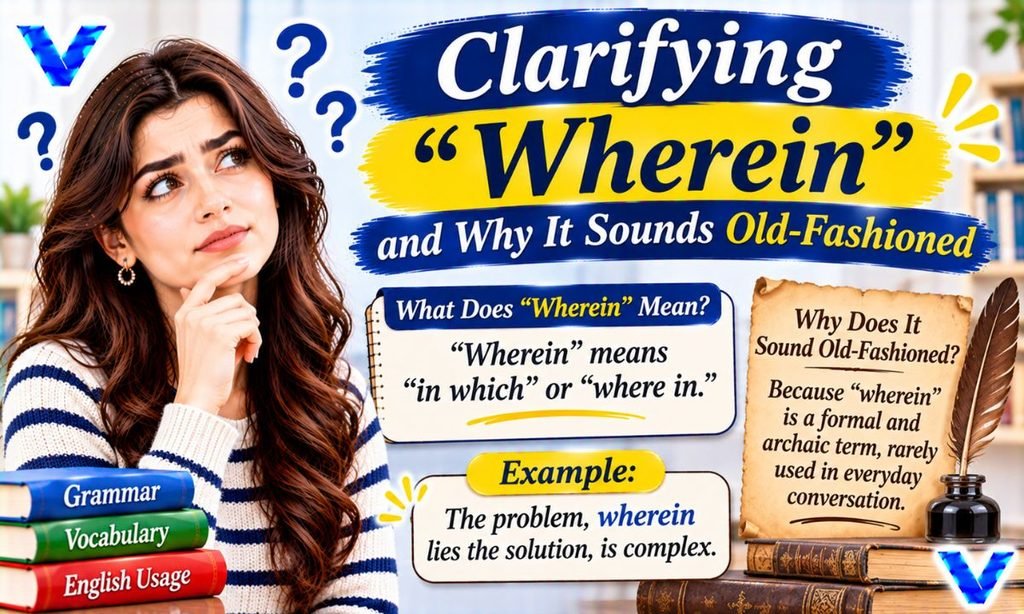
“Wherein” is essentially a formal, single-word replacement for “in which.” It means “in which” or “in what,” but it carries a distinctly legal or archaic tone today.
- Formal/legal: This is the clause wherein the terms are outlined.
- Modern equivalent: This is the clause in which the terms are outlined.
Unless you’re drafting a legal document or writing in a deliberately formal register, it’s best to avoid “wherein” in everyday content — it can make writing feel stiff or dated.
How to Decide Between “By Which” and “In Which” Instantly
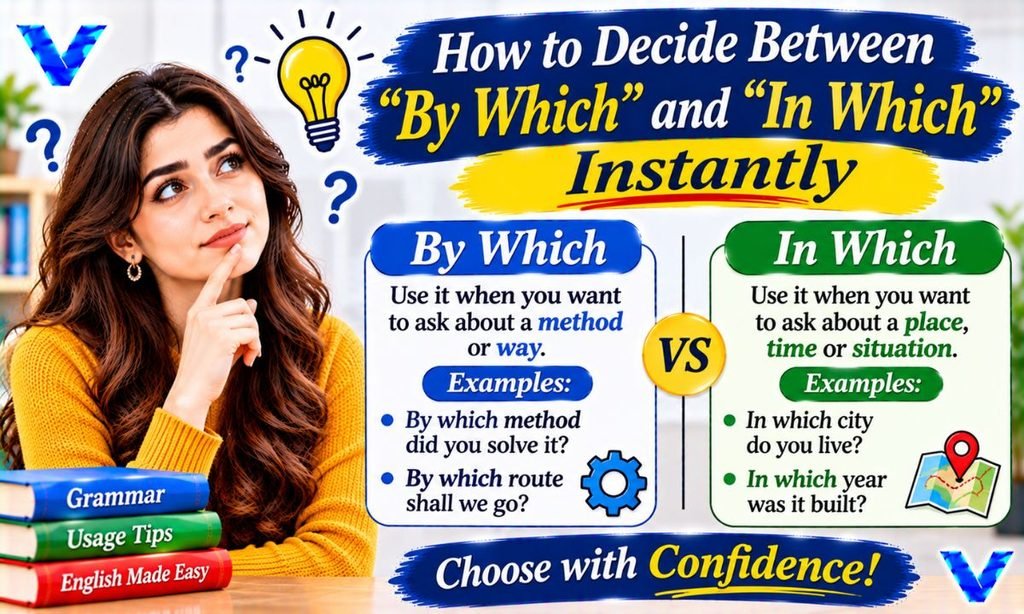
Here’s a simple decision-making shortcut:
- Ask what the sentence is really describing — a method or a place/situation.
- If it’s a method, process, or means → use by which.
- If it’s a location, time, or condition → use in which.
Quick Swap Test
Try substituting the phrase with “how” or “where”:
- If “how” fits naturally → by which
- If “where” fits naturally → in which
Comparative Examples to Make the Differences Clear
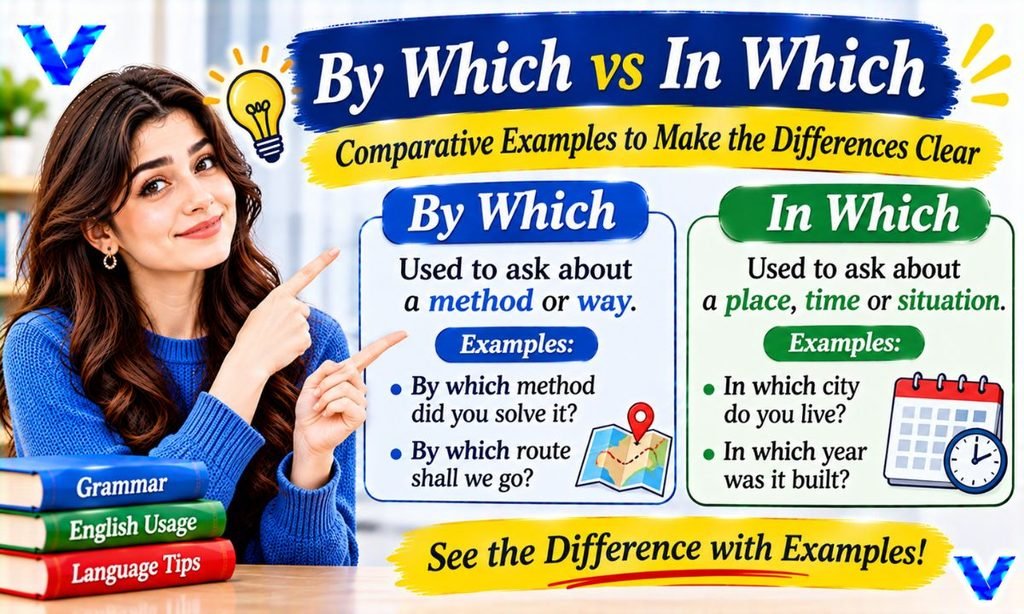
- The technique by which the artist created texture involved layering paint. (method)
- The studio in which the artist worked had large windows. (place)
- The process by which cells divide is called mitosis. (method)
- The textbook in which this concept is explained is outdated. (object/context)
Comparison Table
| Feature | By Which | In Which |
| Refers to | Method/means | Place/situation/time |
| Common substitute | How, through which | Where, during which |
| Formality | Formal | Formal |
| Typical use | Processes, systems, strategies | Locations, scenarios, periods |
By Which or In Which — Grammar Notes
Both phrases function as relative clauses, introducing additional information about a noun mentioned earlier. Grammatically, they are prepositional phrases where the preposition (by/in) pairs with the relative pronoun “which” to link two ideas smoothly, without starting a new sentence.
Key grammar points:
- Both phrases are typically followed by a subject + verb.
- They are common in formal, academic, and business writing.
- They help avoid awkward preposition-stranding, e.g., “the house I live in” becomes “the house in which I live.”
Common Mistakes Writers Make (and Simple Fixes)
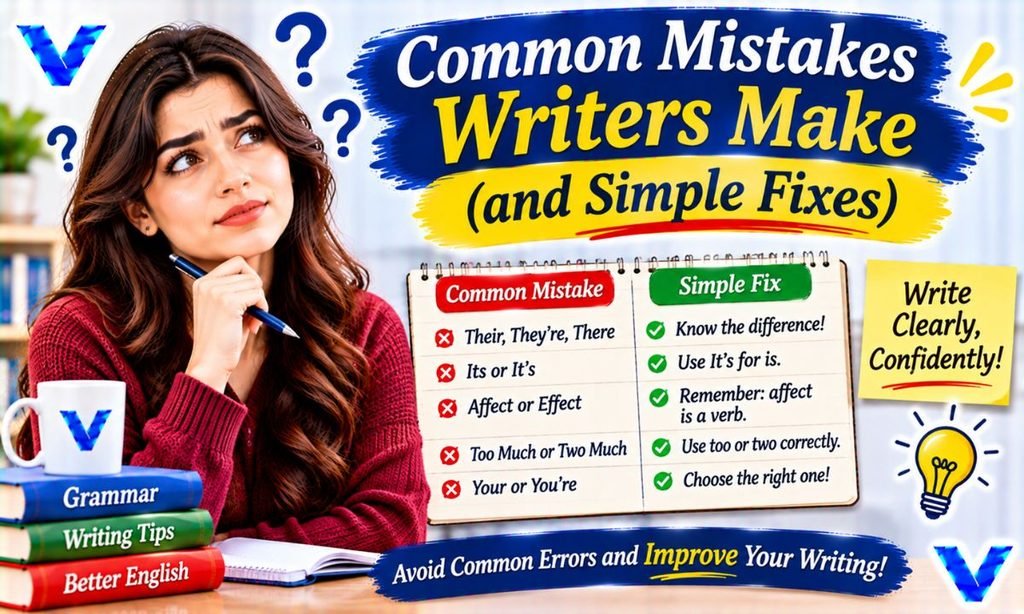
- Mistake: Using “in which” for a method. ❌ The way in which she solved the puzzle was clever, by using logic. ✅ Fix: The way by which she solved the puzzle was clever. (or simply “the way she solved it”)
- Mistake: Overusing “wherein” in casual writing. ✅ Fix: Replace with “in which” or “where” for a more natural tone.
- Mistake: Forcing “in which” or “by which” when a simpler word works. ✅ Fix: Ask if “where,” “how,” or “that” communicates the same meaning more simply.
Advanced Usage Notes for Professional Writers

In academic, legal, and technical writing, precision matters more than brevity. Professional writers often favor “by which” and “in which” because they:
- Prevent ambiguity in complex sentences
- Maintain a formal, authoritative tone
- Avoid ending sentences with prepositions (a stylistic preference in formal writing)
By Which or In Which — Sentences for Practice
- The budget by which the project is measured includes all overhead costs.
- The department in which she was promoted has grown significantly.
- The method by which the survey was conducted ensured anonymity.
- The environment in which children learn best is calm and structured.
Summary Chart for Quick Reference
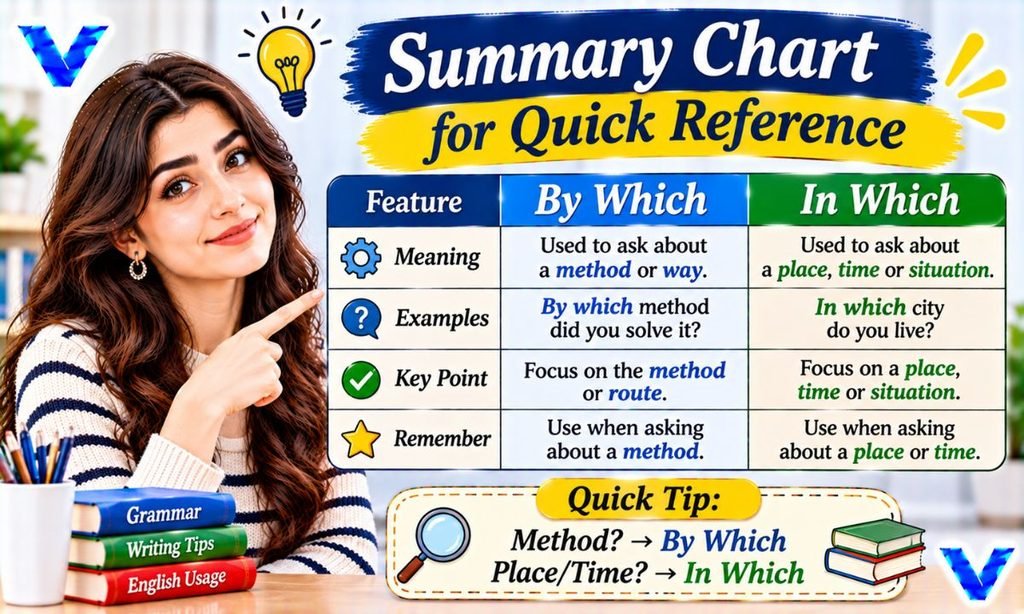
| Ask Yourself | If Yes, Use |
| Does it describe how something happens? | By which |
| Does it describe where or when something happens? | In which |
| Is the tone very formal or legal? | Consider “wherein” |
| Is the tone casual/conversational? | Consider “where” |
Case Studies: How Real Writers Choose the Right Phrase

Case 1 — Business Report: A consultant writing a performance report used “the process by which customer complaints are resolved” to emphasize the method of resolution, not the location.
Case 2 — Academic Paper: A researcher wrote “the conditions in which the experiment was conducted” to specify environmental context, correctly choosing “in which” over “by which.”
Case 3 — Legal Document: A contract used “the manner by which payment shall be made” to describe a procedure, reinforcing that “by which” applies to methods, not places.
By Which — Synonym Options
If “by which” feels too formal, consider these alternatives depending on context:
- Through which
- With which
- How (in casual writing)
FAQs
Q:What do you mean by “which is which”?
It’s an idiom used when two or more things are hard to tell apart, asking someone to clarify or identify each one individually.
Q:How to use “which” in sentences?
Use “which” to introduce a clause that adds extra, non-essential information about a noun already mentioned, usually set off by a comma.
Q:What does “by which” mean?
“By which” refers to the method, means, or process through which something is done or achieved.
Q:How else can I say “in which”?
You can often replace “in which” with “where,” or in very formal writing, with “wherein.”
Q:When to use “in which” and “by which”?
Use “in which” for places, situations, or time; use “by which” for methods, means, or processes.
Conclusion
The difference between “by which” and “in which” comes down to one simple question: are you describing how something happens, or where/when it happens? Once you internalize this distinction, choosing the right phrase becomes automatic.
Whether you’re writing a business report, an academic paper, or a blog post, using these phrases correctly adds clarity, formality, and precision to your writing — helping you communicate with confidence.










2 thoughts on “By Which or In Which? Learn the Correct Usage with Examples”