A single hyphen sits between “all time” and “all-time,” yet it changes how a sentence reads, how professional it sounds, and whether it’s even grammatically correct. If you’ve ever paused mid-sentence wondering whether to write “the greatest player of all-time” or “the greatest player of all time,” you’re not alone. This mix-up shows up constantly in sports articles, marketing copy, resumes, and everyday emails.
The good news: the rule is simple once you see the pattern. This guide breaks down exactly when to hyphenate, when not to, and why the distinction matters for clear, professional writing.
What Is Hyphenation?
Hyphenation is the practice of joining two or more words with a hyphen (-) to form a single descriptive unit, usually right before a noun. Hyphens tell the reader: “treat these words as one idea, not two separate ones.”
Common examples include:
- well-known author
- part-time job
- high-quality service
- record-breaking performance
The same logic applies to “all-time.” When two or more words act together to describe a noun, a hyphen links them so the reader instantly understands they form a single modifier rather than a loose string of words.
Read More:Heard vs Herd vs Hurd: How to Use Each Word Correctly
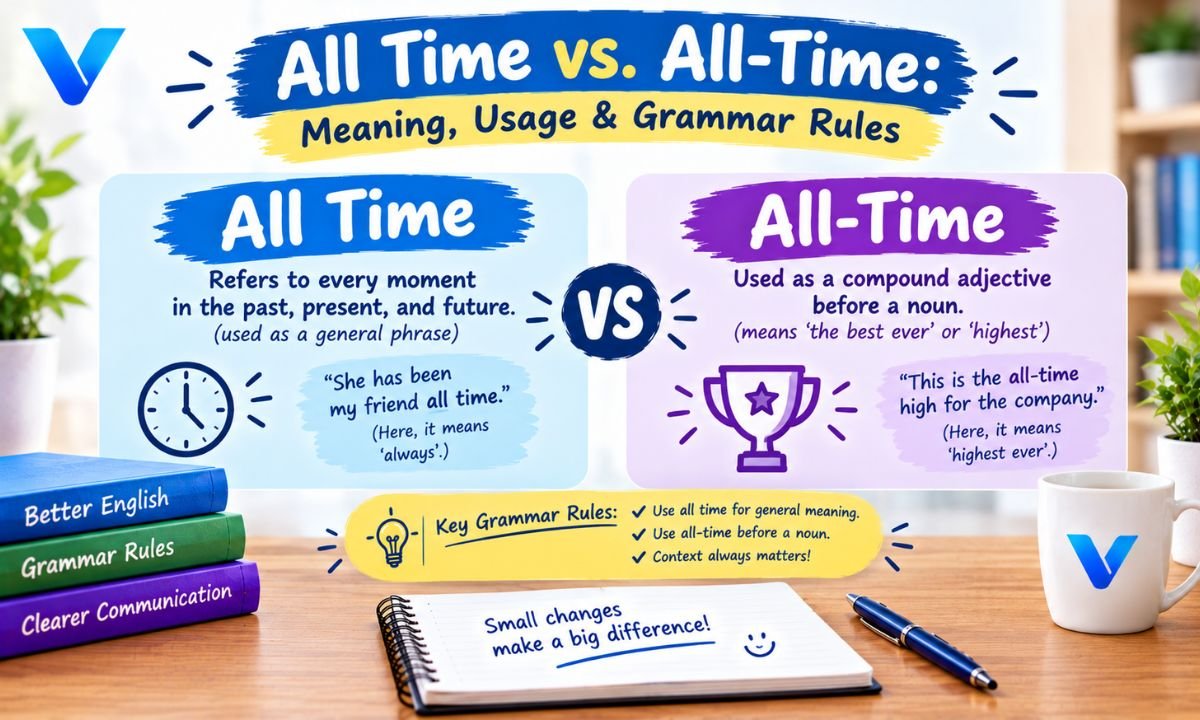
Core Rule: When to Use “All-Time” vs. “All Time”
Here’s the golden rule, stripped of jargon:
- Use all-time (hyphenated) when it comes directly before a noun, working as a compound adjective.
- Use all time (no hyphen) when it functions as a noun phrase, usually after a preposition like “of,” or when it refers to an entire span of history or duration.
That’s it. Everything else is just examples reinforcing this one idea.
Read More:Its Self or Itself? The Complete Grammar Guide You Actually Need
“All-Time” (With Hyphen): The Modifier Rule
When to Use “All-Time”
“All-time” acts as a compound adjective. It sits before a noun and describes something as the greatest, highest, lowest, or most extreme in its category. You’ll see it constantly in sports, business, and entertainment writing.
Examples:
- She is my all-time favorite author.
- The company reported an all-time high in quarterly sales.
- He is considered the all-time best player in league history.
- This was an all-time low for the team’s morale.
Notice that in each case, “all-time” sits immediately before a noun (“favorite,” “high,” “best player,” “low”) and works as one unit to modify it.
Why the Hyphen Matters
Without the hyphen, a sentence can look unfinished or even confusing. Compare:
- ✅ “That was an all-time great performance.”
- ❌ “That was an all time great performance.”
The second version reads awkwardly because English readers expect a hyphen to signal that “all” and “time” are fused into a single descriptive term before “great performance.” Skipping it makes the sentence feel careless, even if the meaning is technically clear. In professional writing, business reports, and published content, this small detail signals attention to detail and editorial polish.
“All Time” (No Hyphen): The Phrase Rule
“All time,” without a hyphen, functions as a noun phrase. It refers to the complete span of history, duration, or existence — not a specific rank or record. It typically appears after a preposition (most often “of”) or after a verb, rather than directly before a noun.
Examples:
- This is the best movie of all time.
- She has been my friend for all time.
- Fans still debate who the greatest boxer of all time really is.
In each sentence, “all time” completes a thought about duration or scope. It answers the question “across what period?” rather than describing a noun directly.
Side-by-Side Comparison
| Feature | All-Time (Hyphenated) | All Time (No Hyphen) |
| Function | Compound adjective | Noun phrase |
| Position | Directly before a noun | After a preposition or verb |
| Meaning | Greatest/highest/lowest in a category | Entire span of history or duration |
| Example | all-time favorite, all-time high | best of all time, for all time |
| Common context | Sports records, business metrics, rankings | History, duration, timeless statements |
Common Mistakes Writers Make
Even experienced writers slip up on this rule. Watch out for these frequent errors:
- Hyphenating after the noun: Writing “the best player all-time” instead of “the best player of all time.” Once the phrase follows the noun (usually after “of”), drop the hyphen.
- Skipping the hyphen before a noun: Writing “an all time record” instead of “an all-time record.” If it sits directly before the noun, it needs the hyphen.
- Confusing “all-time” with duration: Using “all-time” to describe how long something lasted, when “all time” (the open phrase) is what’s needed. “This has been my favorite for all time” is correct; “for all-time” is not.
- Inconsistent usage in the same document: Mixing both forms without a clear rule creates an unpolished, inconsistent tone that editors will flag.
What Style Guides Say
All Time vs All Time Reddit
Search Reddit’s grammar and writing communities, and you’ll find the same debate popping up in threads about resumes, sports statistics, and headline writing. The general consensus among editors and language enthusiasts online matches formal style guides: hyphenate before a noun, leave it open everywhere else. Many Redditors point to real-world examples from sports journalism, where “all-time leading scorer” and “leading scorer of all time” both appear correctly in the same article.
Style Guide Notes
Major dictionaries, including Cambridge and Oxford, list “all-time” as the standard adjectival form, always hyphenated. “All time” is treated as a separate, open phrase used in noun contexts. The Associated Press (AP) Stylebook and Chicago Manual of Style both follow the same before-noun/after-noun logic that governs most compound modifiers in English.
Context Matters: Tips and Tricks
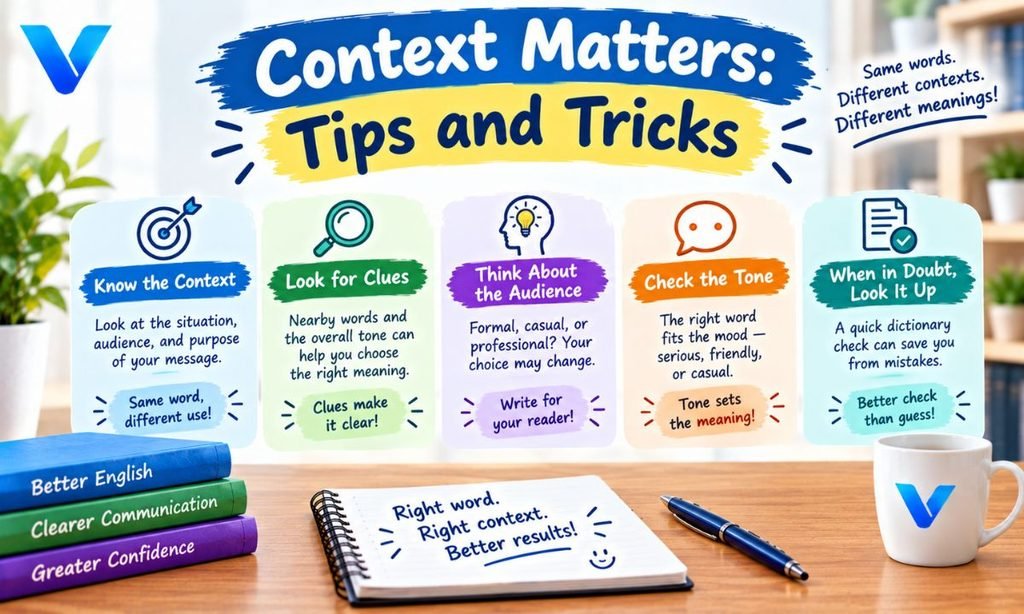
A quick mental test: try inserting “of” before the phrase. If “of all time” sounds natural and complete, skip the hyphen. If the phrase needs to sit right before a noun to make sense, add the hyphen.
All Time vs All Time Clock
Outside of grammar debates, “all-time” occasionally appears in casual references to tracking systems, like an “all-time clock” that records cumulative hours (for example, in fitness apps or work-hour trackers). In this technical sense, it still functions as a compound adjective modifying “clock,” so the hyphen stays. The rule doesn’t change just because the context shifts from sports to software.
Case Studies: Real Sentences Fixed
| Incorrect | Corrected | Why |
| He is the greatest all time. | He is the greatest of all time. | “All time” needs “of” before it as a noun phrase. |
| That’s an all time classic. | That’s an all-time classic. | “All-time” modifies “classic” directly, so it needs the hyphen. |
| She holds the all-time record of all time. | She holds the all-time record. | Redundant phrasing; only one form is needed. |
| This has been my dream job for all-time. | This has been my dream job for all time. | Describing duration, not a rank, so no hyphen. |
Beyond “All-Time”: Related Hyphenation Rules
The all-time vs. all time rule is part of a broader pattern in English grammar involving compound modifiers:
- Before the noun, hyphenate: a well-written essay, a five-year plan, a state-of-the-art facility.
- After the noun, don’t: The essay was well written. The plan lasted five years.
- Adverbs ending in “-ly” don’t need hyphens: a highly rated book (not “highly-rated”).
Learning this one pattern makes dozens of similar compound-word decisions much easier across your writing.
Quick Decision Checklist
When to Write “All-Time”
- It comes directly before a noun.
- It describes a record, rank, or extreme (highest, lowest, best, worst).
- Removing it would leave the noun without its intended modifier.
When to Write “All Time”
- It follows a preposition like “of” or “for.”
- It refers to duration, history, or an entire span of existence.
- It does not sit immediately before a noun.
Mini Quiz: Test Your Knowledge
- This is the ______ (all-time/all time) best-selling novel.
- She’s been the top scorer of ______ (all-time/all time).
- That was an ______ (all-time/all time) low for the stock market.
- He said he’d love her for ______ (all-time/all time).
Answers: 1. all-time, 2. all time, 3. all-time, 4. all time
Summary: Key Takeaways
- Use all-time before a noun as a compound adjective (all-time high, all-time favorite).
- Use all time as a noun phrase, typically after “of” or “for” (best of all time, for all time).
- The position relative to the noun is the deciding factor, not personal preference.
- Dictionaries and style guides consistently support this before-noun/after-noun rule.
- Getting it right signals careful, professional writing in resumes, articles, and business content.
Additional Resources
For further reading on hyphenation and compound modifiers, consult a current edition of the Associated Press Stylebook, the Chicago Manual of Style, or the hyphenation entries in Merriam-Webster and Oxford dictionaries.
FAQs
Q:Which is correct, all time or all times?
“All time” is correct in nearly every context. “All times” is rarely used and typically appears only in specific phrases like “at all times,” meaning “always” or “continuously.”
Q:Is it “of all time” or “all times”?
“Of all time” is correct. It’s the standard phrase used to describe something as the best, worst, or greatest across history, as in “the best movie of all time.”
Q:What is another way to say “of all time”?
You can say “ever,” “in history,” or “of any era.” For example, “the greatest athlete ever” works as a natural alternative to “the greatest athlete of all time.”
Q:What to say instead of “all the time”?
Alternatives include “constantly,” “always,” “continually,” or “nonstop,” depending on the tone and context you want to convey.
Q:What’s a good word for “always on time”?
“Punctual” is the best single-word substitute for someone or something that is always on time.
Conclusion
The difference between “all time” and “all-time” comes down to one simple test: does the phrase sit directly before a noun, or does it complete a thought about duration and history? Hyphenate before a noun; leave it open everywhere else.
Once this rule clicks, you’ll never second-guess phrases like “all-time favorite” or “best of all time” again — and your writing will read cleaner, more polished, and more professional as a result.










2 thoughts on “All Time vs All-Time: Meaning, Usage & Grammar Rules”