
Have you ever heard someone say, “That’s absolutely true,” and wondered why “true” alone wasn’t enough? You’re not the only one. This tiny phrase shows up everywhere — in news headlines, courtroom dramas, casual chats, and viral social media posts — yet very few people stop to ask what it actually means, whether it’s grammatically sound, or when it’s the wrong choice of words.
This guide breaks down everything you need to know about “absolutely true”: its real meaning, its grammar, its synonyms, and the subtle situations where a simpler word might serve you better. By the end, you’ll know exactly how to use this phrase like a native speaker — and when to leave it out entirely.
What “Absolutely True” Actually Means
At its core, “absolutely true” means something is completely correct, with zero exceptions and no room for doubt. The adjective “true” already signals accuracy, but adding “absolutely” turns a quiet statement of fact into a confident, unshakeable declaration.
Think of the difference between these two sentences:
- “That’s true.”
- “That’s absolutely true.”
The first is a calm acknowledgment. The second is an emphatic stamp of certainty — the kind you’d use when you want to shut down any possible argument.
Read More:Heartfelt Quotes: “You Are Missed” — About Missing Someone
Nuanced Meaning: Why “Absolutely True” Goes Beyond Literal Accuracy
On paper, “absolutely true” is redundant — after all, something is either true or it isn’t. But language rarely works on pure logic. In real conversation, the phrase does emotional and rhetorical work that “true” alone cannot:
- It eliminates ambiguity, telling the listener there’s no gray area.
- It reinforces conviction, especially in debates or persuasive writing.
- It validates someone’s feelings or opinion, not just the facts they’ve stated.
So while the literal meaning doesn’t change much, the emphasis completely shifts how the statement lands.
Why “Absolutely True” Isn’t Just a Filler Phrase
Some grammar purists argue that “absolutely” before “true” is unnecessary padding. In practice, though, intensifiers like this exist because plain statements often don’t carry enough weight in real-time conversation. When someone shares a surprising fact and you respond with “absolutely true,” you’re doing more than confirming accuracy — you’re signaling enthusiasm, agreement, and trust in the source.
Read More: Sizable vs Sizeable: Difference, Definition & Examples
Absolutely True Synonyms and Slang
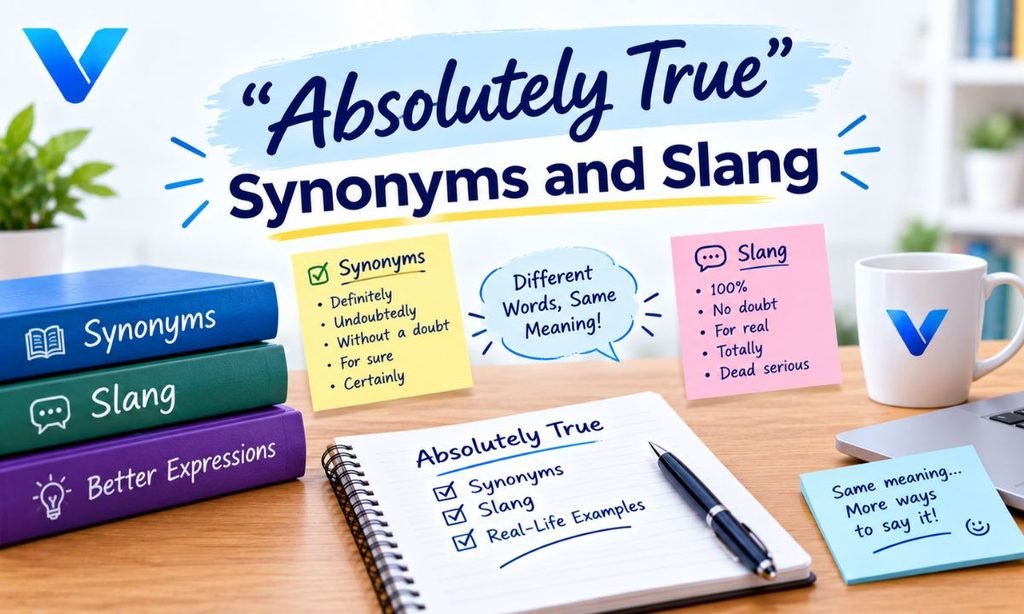
Depending on the setting, you can swap “absolutely true” for something more casual, more formal, or more regionally flavored.
| Register | Synonym/Slang | Best Used In |
| Casual/slang | “For real,” “No cap,” “Facts” | Texting, social media, informal chats |
| Everyday conversation | “Totally true,” “So true,” “100%” | Friendly discussions |
| Formal writing | “Undeniably true,” “Unquestionably accurate” | Reports, essays, journalism |
| Academic tone | “Empirically verified,” “Factually correct” | Research papers, technical writing |
Alternatives to “Absolutely True” (With Context and Examples)
Choosing the right alternative depends heavily on your audience and tone:
- “Certainly true” – Slightly more formal, works well in professional emails. Example: “It is certainly true that remote work has changed hiring practices.”
- “Without a doubt” – Great for spoken emphasis. Example: “Without a doubt, that recipe tip works every time.”
- “That checks out” – Casual, often used after fact-checking something.
- “Spot on” – British-leaning, ideal for agreeing with someone’s assessment.
Absolutely Right Meaning
It’s worth separating “absolutely true” from “absolutely right,” since people often confuse the two. “Absolutely true” refers to the accuracy of a statement or fact. “Absolutely right” usually refers to a person’s opinion, answer, or judgment being correct. For example, you’d say a scientific claim is “absolutely true,” but you’d tell a friend they’re “absolutely right” about a decision they made.
Is “Absolutely True” Grammatically Correct?
Yes — “absolutely true” is completely grammatical and widely used in both American and British English. There’s no rule that forbids pairing an intensifying adverb with an adjective that already implies certainty.
Grammar Rule That Applies Here
In English, adverbs typically come before the adjectives they modify when adding emphasis. “Absolutely” is an adverb, and “true” is an adjective, so the structure follows a standard pattern:
- Correct: “That is absolutely true.”
- Incorrect: “That is true absolutely.”
This word order isn’t unique to this phrase — it applies to similar constructions like “completely wrong,” “totally fine,” or “utterly ridiculous.”
How Native Speakers Use “Absolutely True” in Real Life
Native English speakers reach for this phrase in a handful of predictable situations:
- To agree strongly with someone in conversation.
- To confirm a fact after checking or verifying it.
- To back up a claim in writing, especially journalism or persuasive essays.
- To respond to a rhetorical question, like “Isn’t it wild how fast technology changes?” → “Absolutely true.”
When Not to Use “Absolutely True”
There are moments where this phrase feels out of place or overly dramatic:
- When agreeing with an opinion, not a fact — “I absolutely agree” fits better.
- In highly formal or academic writing, where “empirically supported” or “well-documented” sounds more precise.
- When the statement is only partially accurate — using “absolutely” here can come across as misleading.
- In repeated use within the same conversation, where it starts to feel forced or insincere.
What Style Guides and Linguists Say About “Absolutely True”
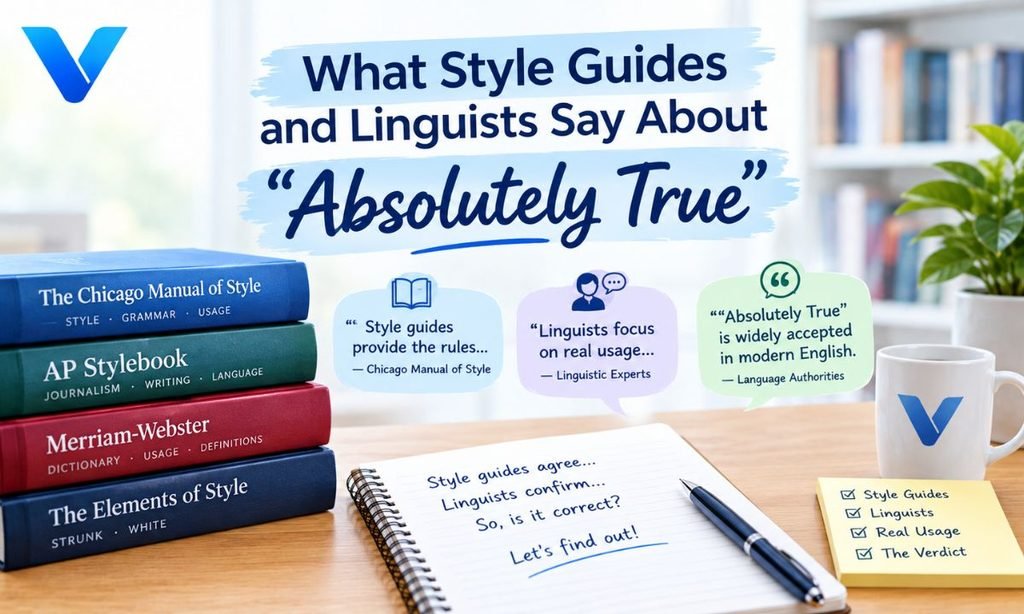
Most style guides don’t explicitly ban intensifiers like “absolutely,” but they do caution against overusing them in formal or academic contexts. Linguists generally view phrases like this as part of natural emphatic language — a category of expressions that exist to strengthen meaning rather than change it. The consensus: it’s not wrong, but it’s a tool best used sparingly for maximum impact.
Should You Say “Absolutely” Alone Instead of “Absolutely True”?
Sometimes, yes. If someone asks a yes-or-no question, replying with just “Absolutely!” is often cleaner and more natural than the fuller phrase.
- Question: “Is that recipe really that good?”
- Reply: “Absolutely!” (implies “absolutely true” without needing the extra word)
When “Absolutely True” Works Better
Use the full phrase when you’re specifically affirming the accuracy of a claim, rather than just answering a yes/no question. It also works better in writing, where the standalone word “absolutely” can feel abrupt or vague without context.
Absolutely Synonyms
Beyond “absolutely true,” the word “absolutely” on its own has plenty of substitutes depending on tone:
- Certainly
- Definitely
- Without question
- Completely
- Unquestionably
Linguistic Insight: Why English Uses Emphatic Phrasing
English relies heavily on intensifiers because tone of voice doesn’t always translate to text. Words like “absolutely,” “totally,” and “completely” exist to recreate the vocal emphasis we’d naturally use in speech, which is why they show up so often in dialogue, advertising, and everyday conversation.
Examples of “Absolutely True” in Popular Media, News and Literature
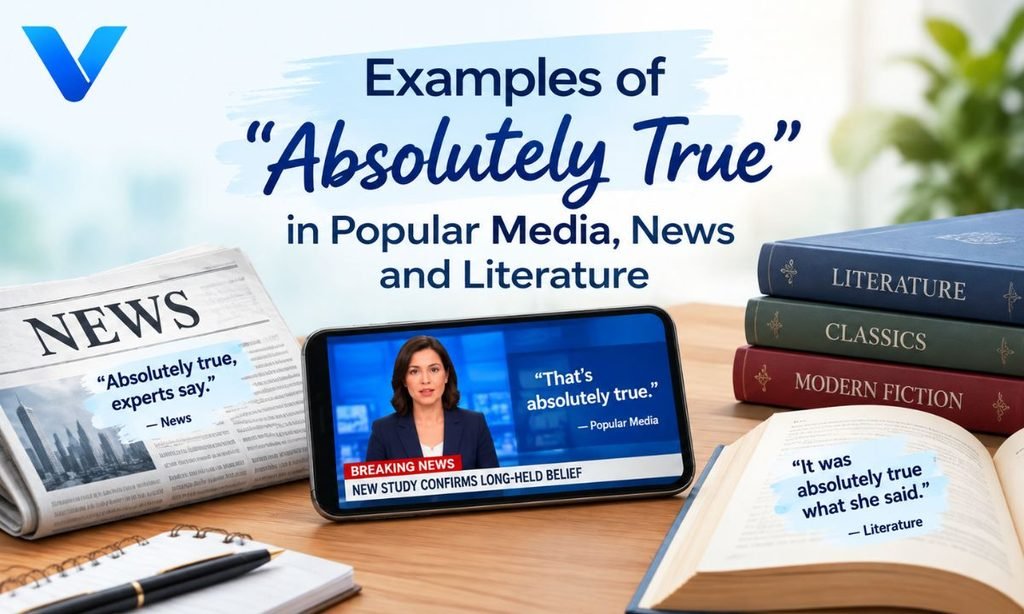
The phrase appears frequently in journalism when reporters want to confirm a surprising or previously doubted claim. In interviews, public figures often use it to validate a statement made by a host or another guest. In literature and film dialogue, characters use it to express strong agreement or emotional conviction, especially in dramatic or persuasive scenes. This widespread use across formal and informal media is part of why the phrase feels so familiar, even though its logical necessity is debatable.
Can You Say “Absolutely False”? Yes — and Here’s Why It Matters
Just as “absolutely” intensifies “true,” it works the same way with its opposite. “Absolutely false” means something is entirely incorrect, with no partial truth involved. This pairing matters because it shows that “absolutely” isn’t tied to positivity — it’s a general-purpose intensifier that can amplify any adjective, whether affirming or denying a claim.
Mistakes to Avoid
- Overusing intensifiers in a single piece of writing, which weakens their impact.
- Using “absolutely true” for opinions, where “absolutely agree” is more accurate.
- Stacking intensifiers, like saying “very absolutely true,” which is redundant and awkward.
- Using it sarcastically without clear context, which can confuse readers or listeners.
The Verdict: Should You Say “Absolutely True”?
Yes, you can — and often should — use “absolutely true” when you want to strongly confirm a fact, especially in conversation or persuasive writing. Just be mindful of context: formal academic writing usually calls for more precise alternatives, while everyday speech welcomes the phrase warmly.
Decision Table for Quick Reference
| Situation | Recommended Choice |
| Casual conversation | “Absolutely true” or “So true” |
| Agreeing with an opinion | “I absolutely agree” |
| Academic or formal writing | “Empirically verified” / “Well-documented” |
| Texting or social media | “Facts” / “No cap” / “100%” |
| Confirming a surprising fact | “Absolutely true” |
| Denying a claim strongly | “Absolutely false” |
FAQs
Q:What word means “absolutely true”?
Words like “undeniable,” “unquestionable,” or “factual” carry a similar meaning of complete accuracy.
Q:Can I say “absolutely true”?
Yes, it’s grammatically correct and commonly used in both spoken and written English.
Q:What can I say instead of “very true”?
Try “absolutely true,” “so true,” or “undeniably true” depending on how formal you want to sound.
Q:Is the phrase “absolutely true” correct?
Yes, it follows standard English grammar, placing the adverb “absolutely” before the adjective “true.”
Q:Does “absolutely” mean yes?
In many contexts, yes — “absolutely” is often used as an enthusiastic way of saying “yes” or confirming agreement.
Conclusion
“Absolutely true” might look redundant on the surface, but it plays a real role in how people communicate certainty and conviction. Whether you’re confirming a surprising fact, backing up a claim in an article, or simply agreeing with a friend, this phrase adds emphasis that plain “true” often can’t deliver.
The key is knowing when to use it — and when a more precise or more casual alternative will serve your message better.









2 thoughts on ““Absolutely True”: Incredible Facts That Sound Too Good to Be True”