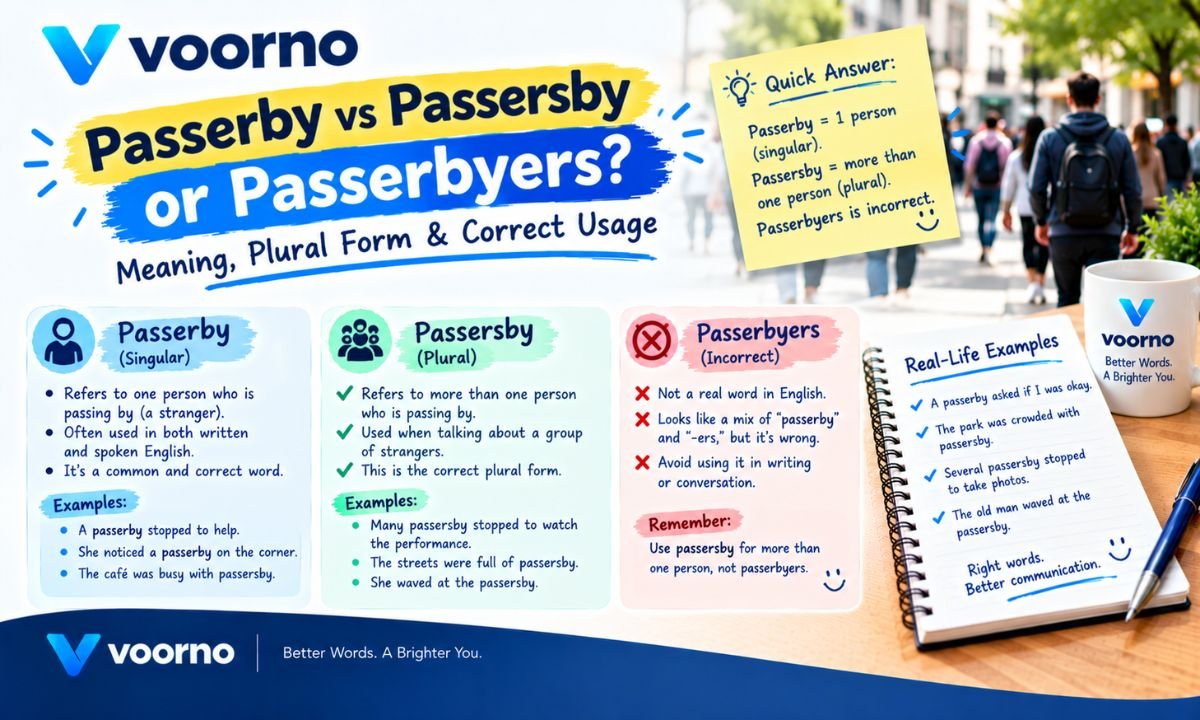
If you’ve ever paused mid-sentence wondering whether to write “passerby,” “passersby,” or something else entirely, you’re not alone. This is one of the most searched grammar questions in English, and for good reason — the word breaks the normal rules we all learned for making nouns plural.
In this guide, you’ll learn exactly what “passerby” means, where it comes from, how to pluralize it correctly, and why so many people (including confident native speakers) get it wrong. By the end, you won’t just know the right answer — you’ll understand why it’s right.
Why “Passerby” Causes So Much Confusion
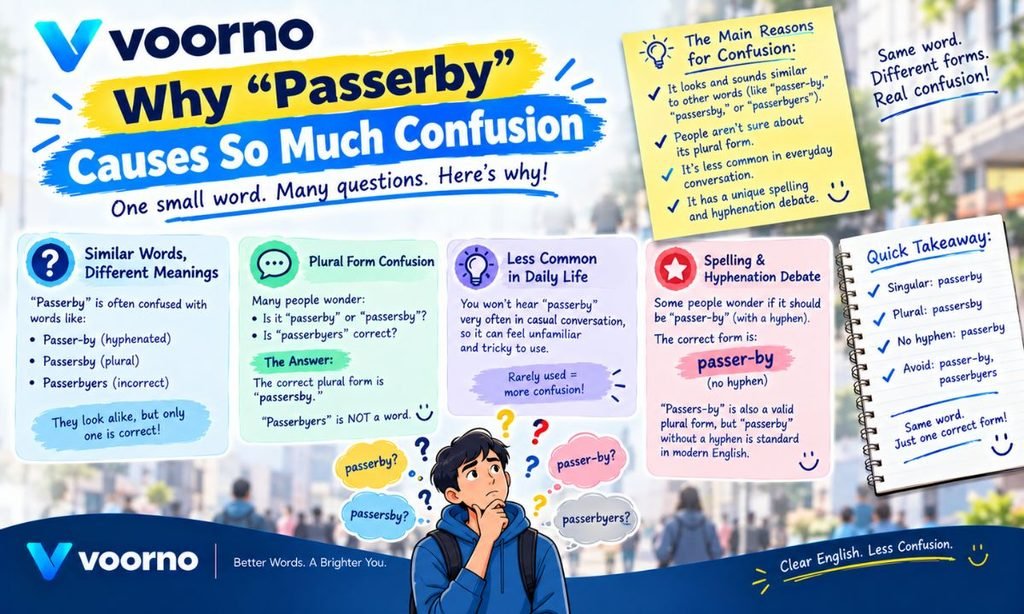
Most English nouns follow a simple rule: add an “-s” to make them plural. Cat becomes cats. Dog becomes dogs. So it feels natural to assume passerby becomes “passerbys.”
The problem is that “passerby” isn’t a simple noun — it’s a compound word built from two parts: passer (the person) and by (the direction). English doesn’t pluralize compound nouns the same way it pluralizes single words, and that mismatch is exactly where the confusion starts.
Add in inconsistent spelling across dictionaries, style guides, and everyday writing — some show it as one word, some hyphenated, some as two words — and it’s easy to see why people land on the wrong form.
Read More:If She Was vs. If She Were: Meaning, Rules & Examples
What “Passerby” Actually Means
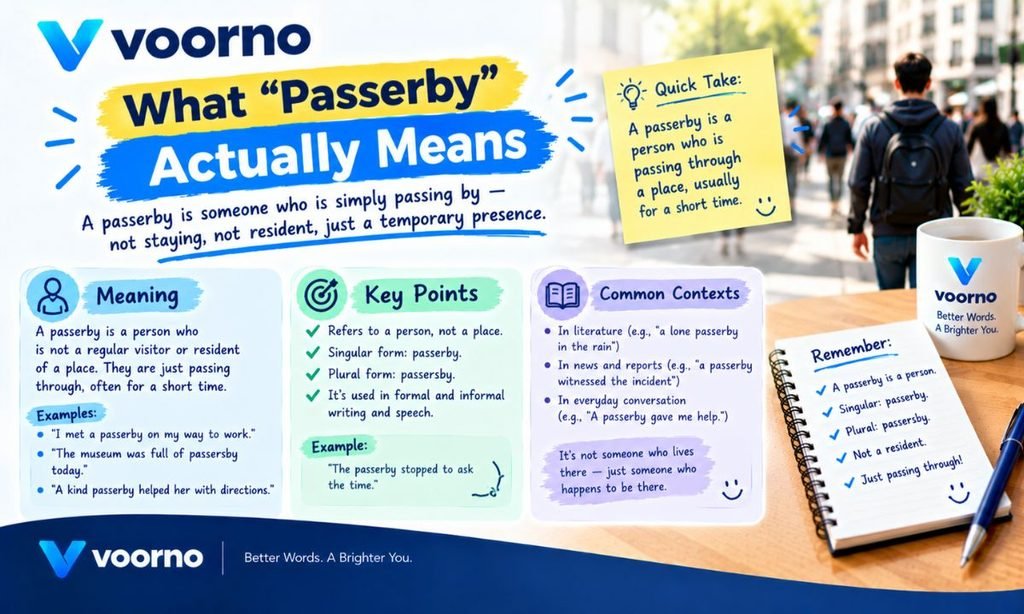
A passerby is a person who happens to be walking past a particular place, person, or event, usually without stopping or getting involved. Think of someone strolling past a shop window, a street performance, or the scene of an accident.
Key points about the meaning:
- It refers to an individual, not a group.
- It usually implies the person is not directly involved in whatever is happening.
- It’s most often used in contexts involving streets, sidewalks, public spaces, or unexpected events.
For example: A passerby noticed the open door and called the police.
Read More:Stick a Fork in It Meaning: Definition, Origin & Examples
Where the Word “Passerby” Comes From
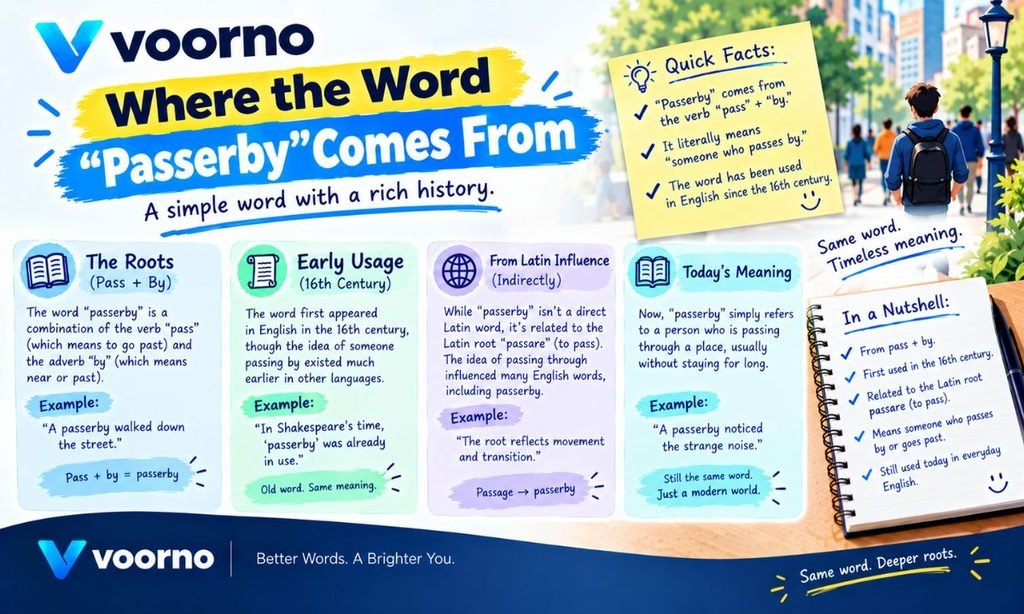
“Passerby” is a fairly old construction in English. It combines:
- Passer — an agent noun from the verb “to pass,” meaning someone who moves past something.
- By — an adverb meaning “near” or “alongside,” used here to indicate direction of movement.
The word emerged in written English roughly in the 1500s, growing out of an earlier sense once carried by “passager” — an older relative of the modern word “passenger.” Over time, “passer” plus “by” fused into a single compound describing anyone who moves past a location, and the spelling gradually settled from a hyphenated form into the single-word form most common today.
Understanding this origin is the key to understanding the plural — because in English, compound nouns like this one pluralize the main noun, not the word tacked onto the end.
How to Pluralize “Passerby” Correctly
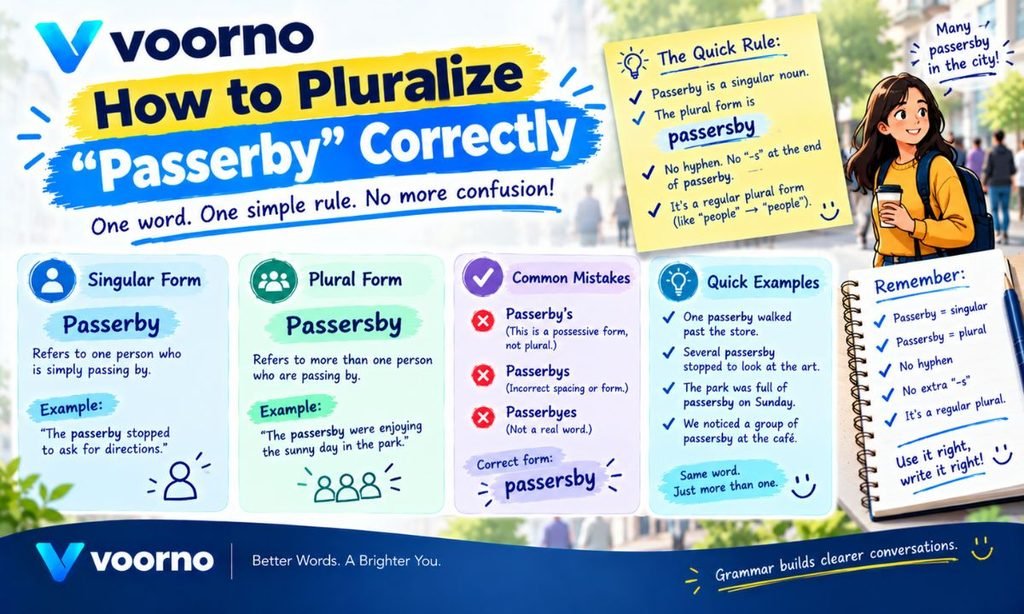
Here’s the rule in plain terms: since “passer” is the head noun (the actual person being described) and “by” is just a directional add-on, the “-s” attaches to passer, not to “by.”
That gives you:
Passerby (singular) → Passersby (plural)
This pattern is called internal pluralization, and it isn’t unique to this word. English has a small family of compound nouns that behave the same way.
| Singular | Correct Plural | Incorrect Plural |
| Passerby | Passersby | Passerbys |
| Attorney general | Attorneys general | Attorney generals |
| Mother-in-law | Mothers-in-law | Mother-in-laws |
| Runner-up | Runners-up | Runner-ups |
| Court-martial | Courts-martial | Court-martials |
Quick examples
- Singular: A lone passerby stopped to help the injured cyclist.
- Plural: Several passersby gathered to watch the street musician.
- Incorrect: Two passerbys walked into the store. ❌
- Correct: Two passersby walked into the store. ✅
Passerby vs Passersby or Passerby Reddit
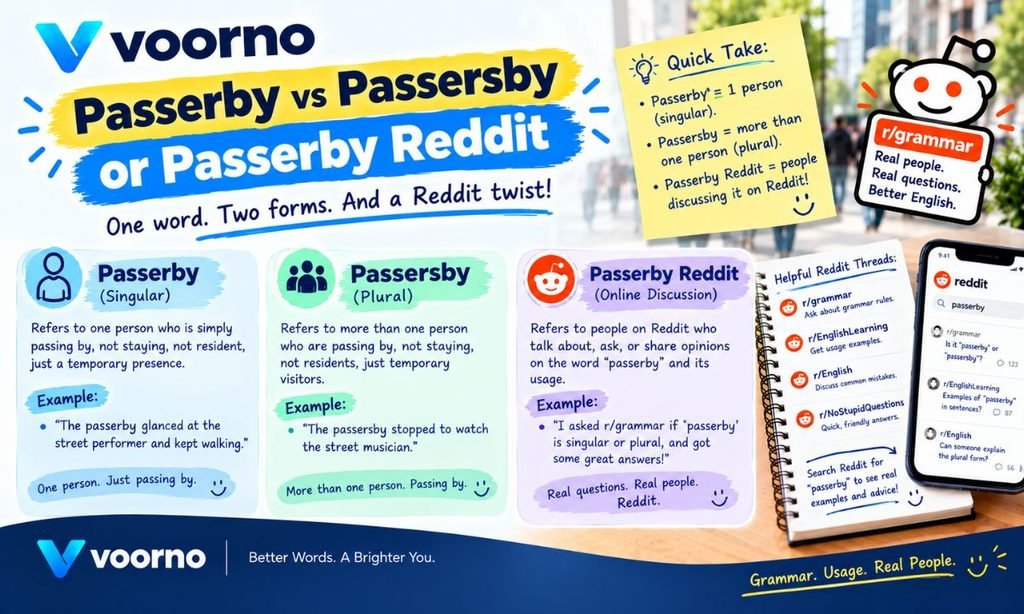
Search Reddit threads on this topic and you’ll find the same debate playing out over and over in language and grammar communities. Commenters generally agree on one thing: “passersby” is the technically correct plural, but plenty of casual writers admit to defaulting to “passerbys” simply because it feels more natural to type.
What these discussions usually highlight is that formal writing, journalism, and edited publications consistently use “passersby,” while informal or unedited text online shows far more variation. The takeaway is simple: if you want your writing to look polished and grammatically sound, stick with “passersby,” regardless of what you see in casual online chatter.
The Common Error “Passerbyers” and Why It Appears
Some writers go a step further than “passerbys” and produce an even less standard form: passerbyers. This isn’t a recognized word in any dictionary, but it does show up occasionally in casual writing and speech.
Why the mistake happens
- Writers try to make the whole compound “sound” plural by adding an extra syllable.
- People sometimes mentally treat “passerby” like an agent noun ending in “-er,” similar to “worker” or “teacher,” and instinctively want to add “-ers.”
- The unusual structure of the word makes people distrust the simpler, correct form.
Why “passerbyers” is incorrect
“Passerbyers” isn’t used in any standard dictionary or style guide because it misunderstands the word’s structure twice over — it treats “by” as a suffix that needs its own plural marker, and it adds pluralization in a way English grammar simply doesn’t support for this compound. The only accepted plural remains passersby.
The Hyphen Question: Passers-by vs Passersby
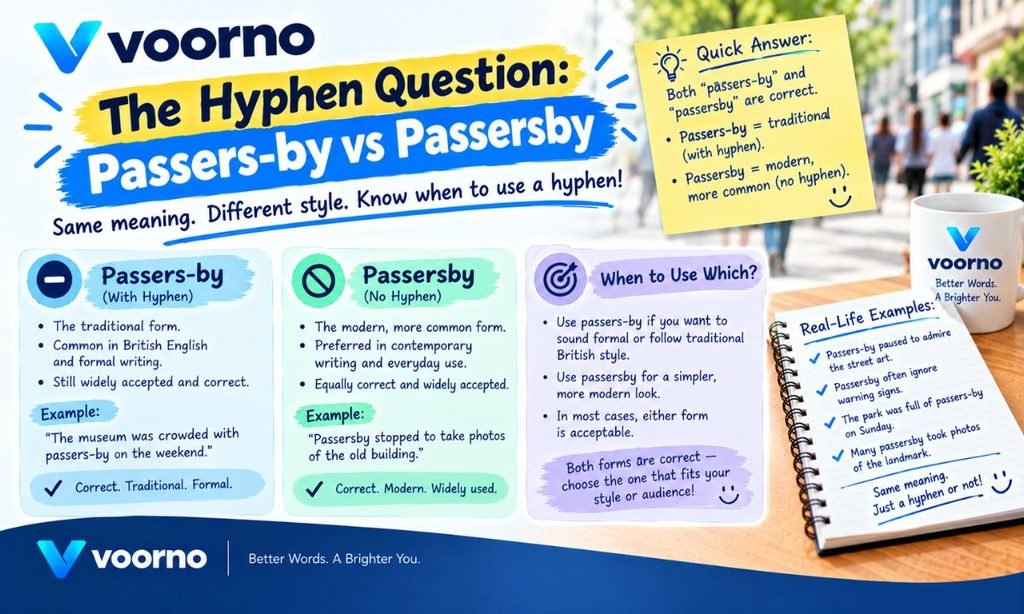
Older texts and some dictionaries still show the hyphenated form, passers-by. Historically, this was the standard spelling, since English writers once hyphenated compound nouns more heavily than we do today.
In modern usage, especially in American English, the closed, one-word form passersby or passerby has become the dominant style. Both forms are technically understood, but here’s a simple way to decide which to use:
| Style Context | Recommended Form |
| Modern blogs, marketing, everyday writing | Passersby |
| Journalism (US-based) | Passersby |
| British or more traditional/formal texts | Passers-by (still acceptable) |
| Academic or legal writing | Either, but stay consistent |
The most important rule isn’t which form you pick — it’s staying consistent throughout a single piece of writing.
When “Passerby” and “Passersby” Work in Real Sentences
Understanding the grammar is one thing; using the words naturally is another. Here’s how each form fits into everyday sentences:
- Passerby (singular): A curious passerby stopped to take a photo of the mural.
- Passersby (plural): Dozens of passersby paused to watch the fire trucks arrive.
- Possessive singular: The passerby’s account of the accident helped police.
- Possessive plural: The passersby’s reactions were caught on camera.
Notice that the apostrophe rules work exactly as they would with any other noun — you’re just applying them to the correct base word (passerby or passersby) rather than a made-up variant.
Usage Mistakes You Should Avoid
Common mistakes
- Writing “passerbys” instead of “passersby.”
- Writing “passerbyers,” which isn’t a real word.
- Randomly switching between “passerby” and “passer-by” in the same document.
- Treating “passersby” as singular in a sentence.
Examples of incorrect usage and fixes
| Incorrect | Corrected |
| The passerbys called for help. | The passersby called for help. |
| A group of passerbyers watched the parade. | A group of passersby watched the parade. |
| The passersby was interviewed by police. | The passerby was interviewed by police. |
| She asked a passers-by for directions, then thanked the passerby. | She asked a passerby for directions, then thanked them. |
Quick Grammar Tips to Remember
- The “-s” always goes on passer, never on “by.”
- Singular = one person = passerby.
- Plural = multiple people = passersby.
- “Passerbys” and “passerbyers” are both incorrect in standard English.
- When unsure, mentally expand the phrase to “passers who go by” — the plural marker naturally lands in the right spot.
How Modern English Has Shaped This Word
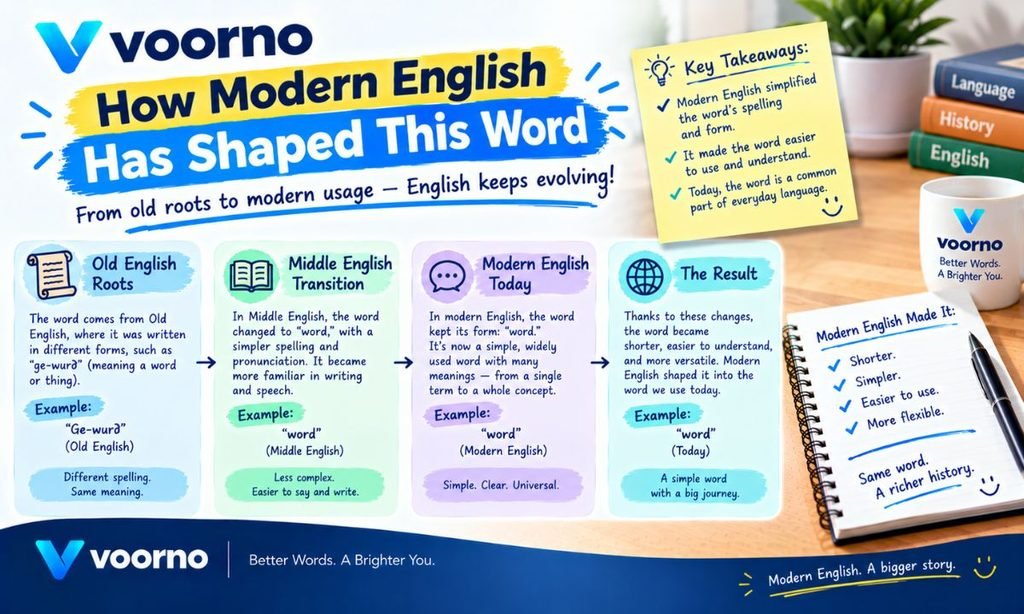
Language evolves through habit and repetition, and “passerby” is a good example of that evolution in action. What started as a hyphenated, almost literal description — a person who passes by — has smoothed into a single, closed compound word in most everyday writing.
At the same time, digital communication has accelerated a countertrend: because people type quickly and rarely double-check irregular plurals, incorrect forms like “passerbys” spread through social media, comment sections, and casual messaging. This doesn’t make them correct, but it explains why they feel increasingly familiar even to attentive writers.
Case Study: Why Writers Still Mix These Forms Up
Consider two writers covering the same street event for local news outlets. One consistently uses “passersby” when describing the crowd, matching AP style and standard dictionary guidance. The other, working faster and relying on auto-correct, writes “passerbys” throughout the piece.
Readers may not consciously register the difference, but editors, teachers, and careful readers will. In professional or academic writing, this kind of slip can undercut credibility, even when the surrounding content is strong. The fix is simple: a quick mental check of the internal-pluralization rule before publishing.
Case Study: How Hyphenation Can Mislead Beginners
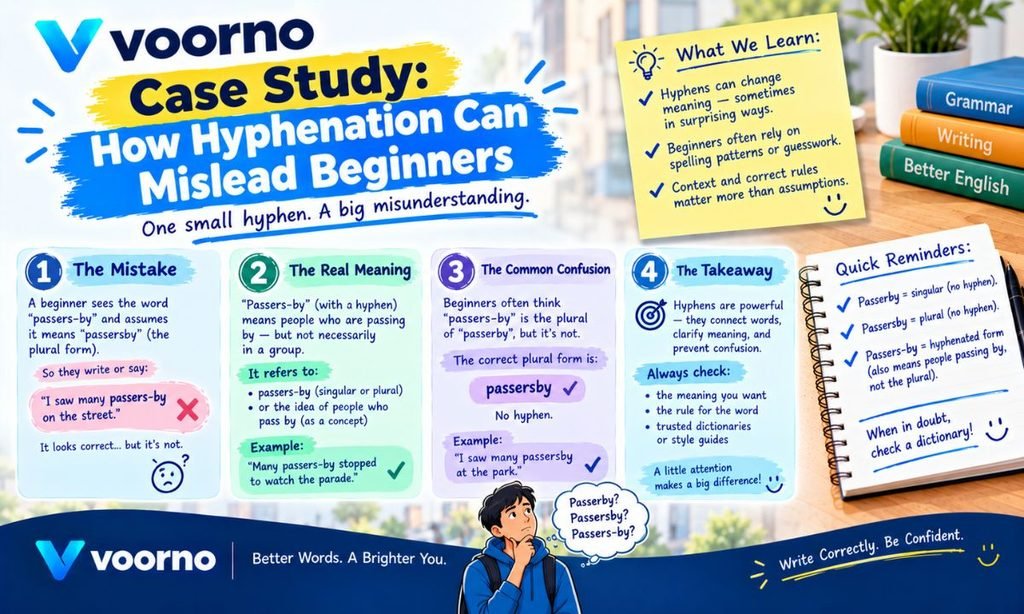
English learners frequently encounter the hyphenated form “passers-by” in older textbooks or dictionaries and reasonably conclude that the hyphen is mandatory. When they then see “passersby” written as one word in a news article, they assume it’s a typo — or worse, they “correct” it back to the hyphenated form in their own writing.
This case illustrates why understanding the reasoning behind a spelling matters more than memorizing one fixed version. Once a learner knows that both forms exist and that closed-compound spelling has become the modern norm, the apparent inconsistency stops being confusing.
Passerby Synonym
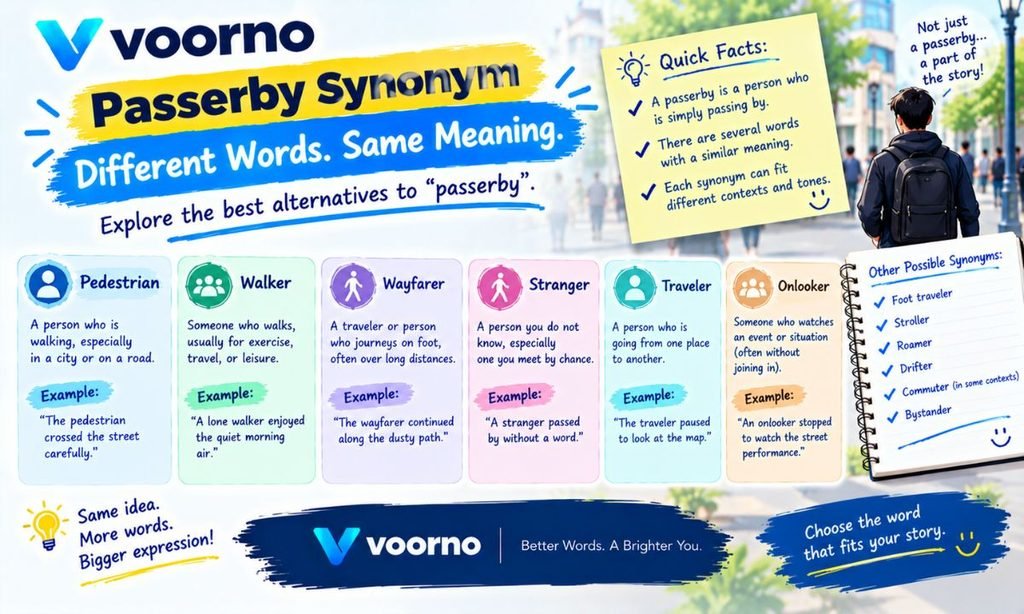
If you want to vary your writing, several words overlap in meaning with “passerby,” though each carries a slightly different shade of meaning:
- Bystander — someone present at an event who doesn’t participate.
- Onlooker — someone watching something happen, often out of curiosity.
- Spectator — someone observing an event, often more formal or organized.
- Pedestrian — someone walking, without the implication of “passing by” a specific event.
- Stranger — a more general term for an unfamiliar person nearby.
Choose “bystander” when someone witnesses something happening, and “passerby” when the emphasis is simply on someone walking past a location.
Real Quotes Using “Passersby” Correctly
News writing offers some of the clearest, most natural examples of “passersby” in context. Reporters regularly describe how crowds react to unexpected public moments — a startled reaction to an accident, a curious crowd drawn to a street performance, or witnesses who come forward after an incident. In each case, “passersby” is used exactly as grammar rules dictate: as the plural form describing multiple people who happened to be walking by. This consistent usage across professional journalism is one of the clearest signals that “passersby,” not “passerbys,” is the accepted standard.
Passerby vs Passersby or Passerby Grammar
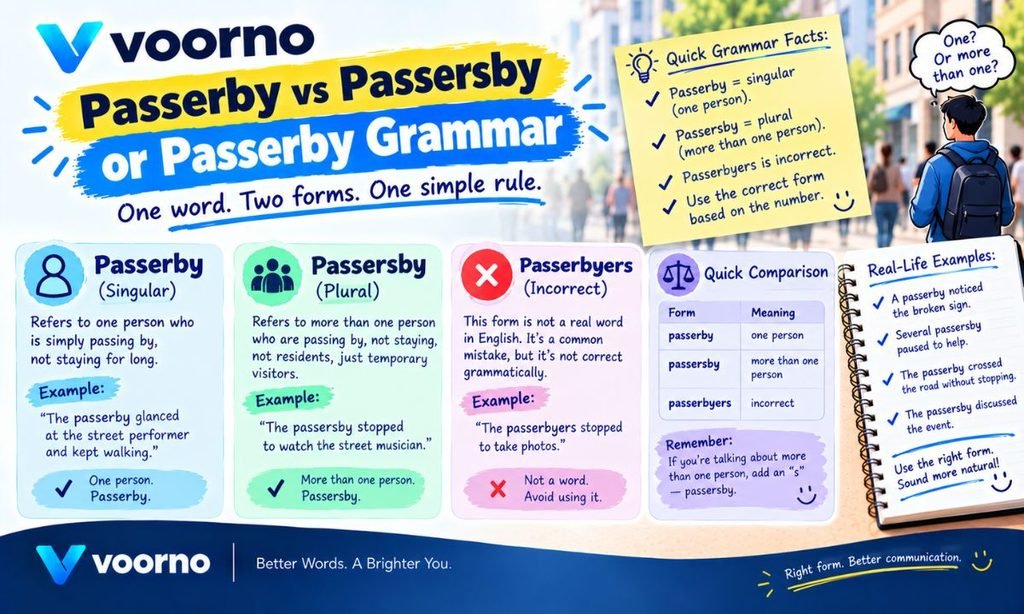
To sum up the grammar mechanics one more time: “passerby” follows a pattern linguists call head-first compounding, where the core noun (passer) sits before the modifier (by), and pluralization always targets that core noun. This is different from typical English compounds like “toothbrush,” where the whole word simply takes an “-s” at the end (toothbrushes) because “brush,” the head noun, is already at the end of the word.
Because “passer” isn’t at the end of “passerby,” the normal end-of-word “-s” rule doesn’t apply — and that single structural fact explains the entire debate.
FAQs
Which is correct, passerby or passersby?
Both are correct, depending on number: “passerby” is singular, and “passersby” is the correct plural form.
What is the plural for passers by?
The plural is “passersby,” with the “-s” added to “passers,” not to “by.”
Does passerby have a hyphen?
Modern usage generally drops the hyphen, though the older hyphenated form “passer-by” (or “passers-by” in plural) is still recognized in some dictionaries.
Is “passerby” singular or plural?
“Passerby” is singular; the plural form is “passersby.”
What is the origin of the word passerby?
It comes from the agent noun “passer” (from the verb “pass”) combined with the adverb “by,” first appearing in English in the 1500s.
Conclusion
The rule behind “passerby” and “passersby” isn’t as complicated as it first appears — once you know that “passer” is the true noun and “by” is just along for the ride, the correct plural stops feeling arbitrary. Remember: one person is a passerby, multiple people are passersby, and forms like “passerbys” or “passerbyers” have no place in careful writing.
Keep this guide handy the next time you’re describing a crowd on a sidewalk, a witness to an event, or anyone simply walking past — and you’ll never second-guess the spelling again.










2 thoughts on “Passerby vs Passersby or Passerbyers: Meaning, Plural Form & Correct Usage”