
Have you ever paused mid-sentence, unsure whether to say “when I can help” or “when can I help”? You’re not alone. This tiny word-order swap trips up native speakers and English learners alike, and it’s one of the most Googled grammar questions out there.
The good news? The rule is simple once you see the pattern. This guide breaks down the meaning, grammar, and real-world usage of both phrases so you never second-guess yourself again.
Understanding the Correct Usage of “When I Can” and “When Can I”
Both phrases use identical words in a different order, and that order changes everything. English relies heavily on word arrangement to signal function — is a sentence asking something, or telling something?
- “When can I” is a question form. It asks about timing, permission, or opportunity.
- “When I can” is a statement form. It describes a condition or a future action tied to availability.
Once you internalize this, the confusion disappears almost instantly.
Read More:It Is Must vs. It Is a Must: Which Is Correct?
Quick Answer: Is It “When Can I” or “When I Can”?
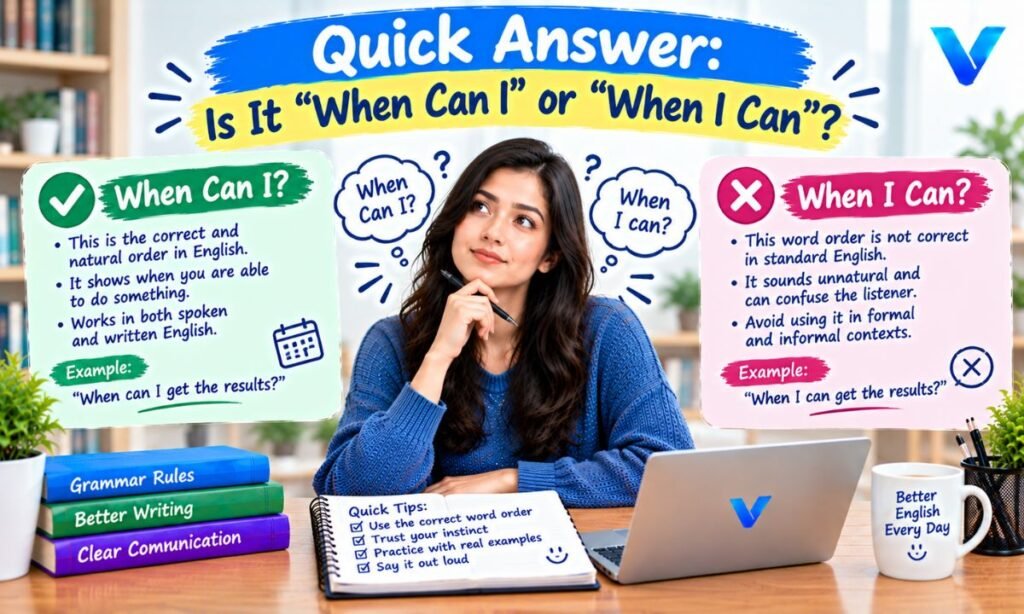
Both are correct — they just serve different purposes.
- Use “when can I” when asking a direct question: When can I see the results?
- Use “when I can” when making a statement or describing a condition: I’ll send the results when I can.
If you’re asking, invert the modal verb before the subject. If you’re stating something, keep the subject first.
Read More:Some of Whom or Some of Who? Correct Grammar Explained
Real-Life Examples in Different Contexts
| Context | Example Sentence | Form Used |
| Workplace email | “When can I expect your reply?” | Question |
| Casual conversation | “I’ll call you back when I can.” | Statement |
| Customer service | “When can I schedule a refund?” | Question |
| Personal planning | “I’ll finish the report when I can.” | Statement |
| Polite request | “When can I pick up my order?” | Question |
| Reassurance | “I’ll help when I can, I promise.” | Statement |
Notice how the question form always seeks information, while the statement form expresses intent or a promise tied to availability.
Comparison Table: Clear Differences Between “When Can I” and “When I Can”
| Feature | “When Can I” | “When I Can” |
| Sentence type | Interrogative (question) | Declarative (statement) |
| Word order | Modal verb before subject | Subject before modal verb |
| Function | Asks about timing/permission | Describes a future condition |
| Common placement | Start of a sentence | Middle or end of a sentence |
| Tone | Direct, proactive | Conditional, flexible |
| Example | “When can I start?” | “I’ll start when I can.” |
Grammar Rules: Modal Verbs and Time Clauses
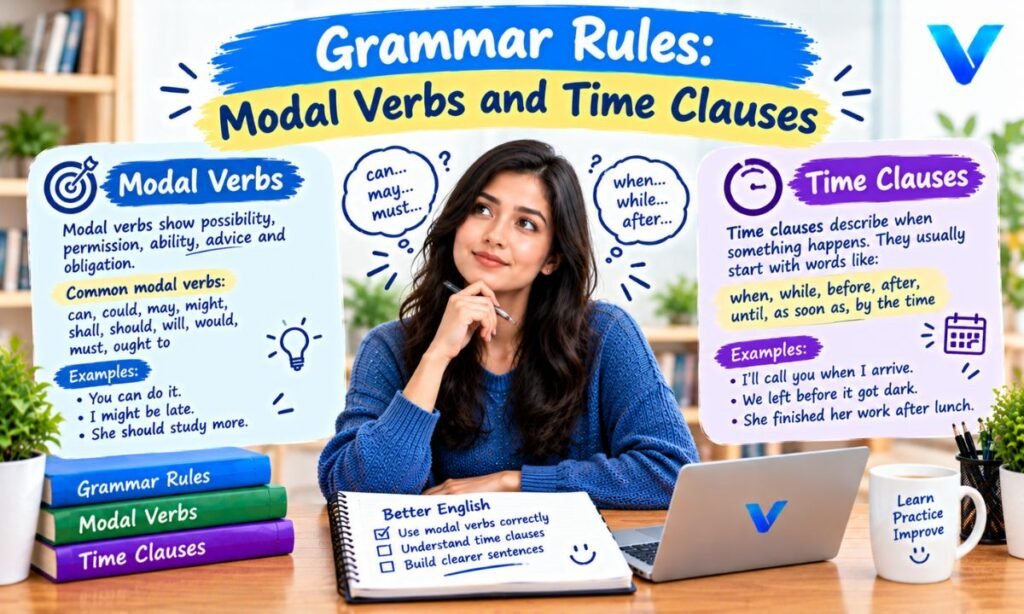
The rule behind this comes down to two grammar concepts: subject-auxiliary inversion and time clauses.
- Modal verbs (can, could, should, would, may, might, will) show ability, permission, or possibility.
- In direct questions, English inverts the subject and modal verb: I can → Can I?
- In statements and subordinate clauses, normal word order returns: subject first, then modal verb.
- “When” functions as a time conjunction in statements (“I’ll leave when I can”) and as a question word in direct questions (“When can I leave?”).
A key trap is the embedded or indirect question. Even though it carries question meaning, it does not use inversion:
- ❌ Tell me when can I go.
- ✅ Tell me when I can go.
This is one of the most common grammar errors learners make, because the sentence “feels” like a question but is grammatically a statement containing a question.
Common Errors to Avoid
- Using inversion inside indirect questions: “I wonder when can I leave” (incorrect) instead of “I wonder when I can leave” (correct).
- Dropping inversion in direct questions: “When I can start?” (incorrect) instead of “When can I start?” (correct).
- Mixing formality levels — using “can I” in highly formal writing where “may I” fits better.
- Overusing the modal “can” instead of varying with “could” for politeness in professional messages.
Subtle Differences: Nuance, Tone, and Formality
“When Can I” – The Tone of Proactivity
This form sounds direct and action-oriented. It signals that the speaker wants clarity now — a timeline, a decision, or permission. It’s common in emails, customer inquiries, and scheduling conversations because it moves the conversation forward.
“When I Can” – The Tone of Limitation
This form carries a softer, more flexible tone. It acknowledges constraints — time, workload, or circumstances — without committing to an exact moment. It’s often used to sound considerate while still promising future action.
Practical Guide: How to Choose the Right One

Ask yourself: What am I doing?
- Am I asking something? → Use “when can I.“
- Am I telling or promising something? → Use “when I can.”
- Is the question embedded inside another sentence? → Use “when I can” (no inversion).
Quick reference list
- Direct question → When can I + verb (e.g., “When can I visit?”)
- Statement/promise → subject + when I can (e.g., “I’ll visit when I can.”)
- Indirect question → verb + when I can (e.g., “Let me know when I can visit.”)
Understanding Sentence Structure: Questions vs. Statements
Interrogative Sentence (Question Form): “When Can I…?”
In a true question, the modal verb jumps ahead of the subject. This is called subject-auxiliary inversion, and it’s the same pattern used in “Can I help?” or “Should I wait?” Adding “when” simply places a time-focused question word at the front: When can I check in?
Declarative Sentence (Statement Form): “When I Can…”
In a statement, the subject leads, followed by the modal verb, keeping the sentence in its natural order. This structure usually appears as a subordinate clause attached to a main clause: I will reply when I can.
Practice Exercises: Test Your Understanding
Try filling in the blanks with the correct form:
- I’ll send the invoice ______ finish the audit. (when I can)
- ______ expect the delivery? (When can I)
- Let me know ______ join the call. (when I can)
- ______ book an appointment? (When can I)
- She said she’d visit ______ take time off. (when she can)
Related Phrases That Cause Confusion
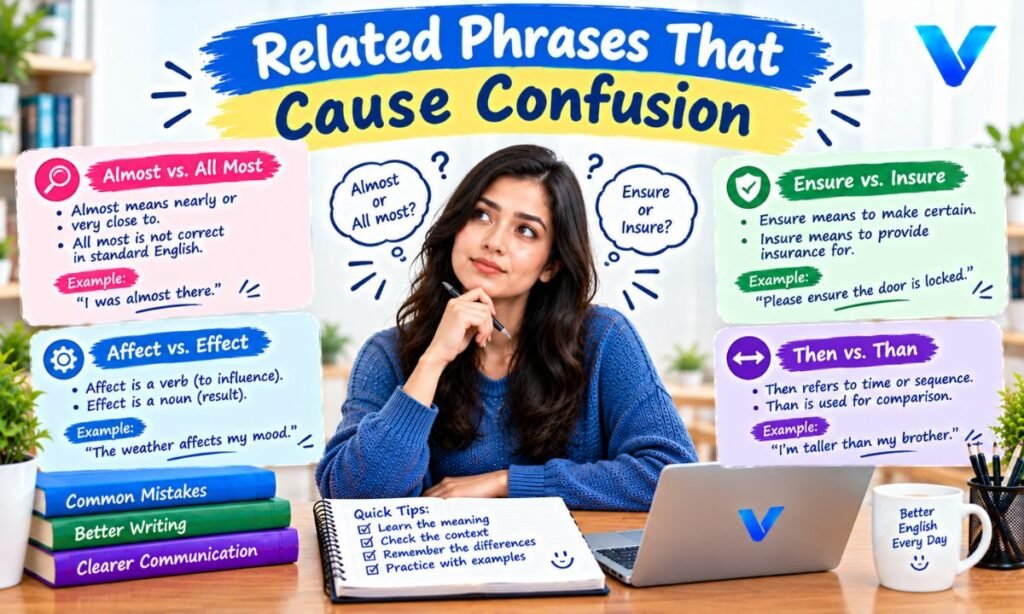
When I Can or When Can I Grammar
The grammar hinges entirely on inversion. Direct questions invert; statements and embedded clauses don’t. This single rule governs nearly every similar modal-verb pair, including “where should I,” “why would I,” and “how can I.”
When I Can or When Can I Examples
- “When can I renew my subscription?” (question)
- “I’ll renew it when I can.” (statement)
- “Could you tell me when I can renew it?” (embedded question, no inversion)
Expert Quote on Grammar Clarity
As grammar educators often note, English depends on word order more than most languages to signal meaning. A small shift in position — especially around a modal verb like “can” — can turn a simple statement into a question, or vice versa. That’s exactly why “when I can” and “when can I” deserve careful attention rather than casual guessing.
Real-World Case Study: Corporate Email Communication
Miscommunication over this phrase isn’t just a classroom issue — it shows up in professional writing too.
Incorrect Version
“Please advise when can I submit the final draft.”
This sentence blends question word order into a statement, making it grammatically inconsistent and slightly awkward to native speakers.
Correct Version
“Please advise when I can submit the final draft.”
This version reads naturally because the request is embedded inside a larger statement, not standing alone as a direct question.
Small corrections like this make professional writing sound more polished, confident, and fluent — which matters in client emails, reports, and job applications.
FAQs
Q:Which is correct: “I can” or “Can I”?
Both are correct depending on context. “I can” is a statement (“I can help”), while “Can I” is a question (“Can I help?”).
Q:What is a 5 sentence for “when”?
Example sentences: “When can I leave?” “I’ll call when I can.” “When she arrives, we’ll start.” “Tell me when you’re ready.” “When I finish, I’ll let you know.”
Q:When can I use “when”?
Use “when” to introduce a time-related question, a time clause in a statement, or to connect two related events in time.
Q:When in grammar rules?
“When” acts as a question word in direct questions and as a subordinating conjunction in statements introducing time clauses.
Q:What is the difference between “When I Can” and “When Can I”?
“When can I” asks a direct question about timing, while “when I can” is a statement describing a future action tied to availability.
Conclusion
The difference between “when I can” and “when can I” comes down to one simple test: are you asking or telling? Questions invert the modal verb before the subject, while statements and indirect questions keep the natural subject-first order.
Once this rule clicks, you’ll use both phrases correctly and confidently — in emails, conversations, and everyday writing — without ever second-guessing yourself again.










2 thoughts on “When I Can or When Can I? Meaning, Grammar & Examples”